
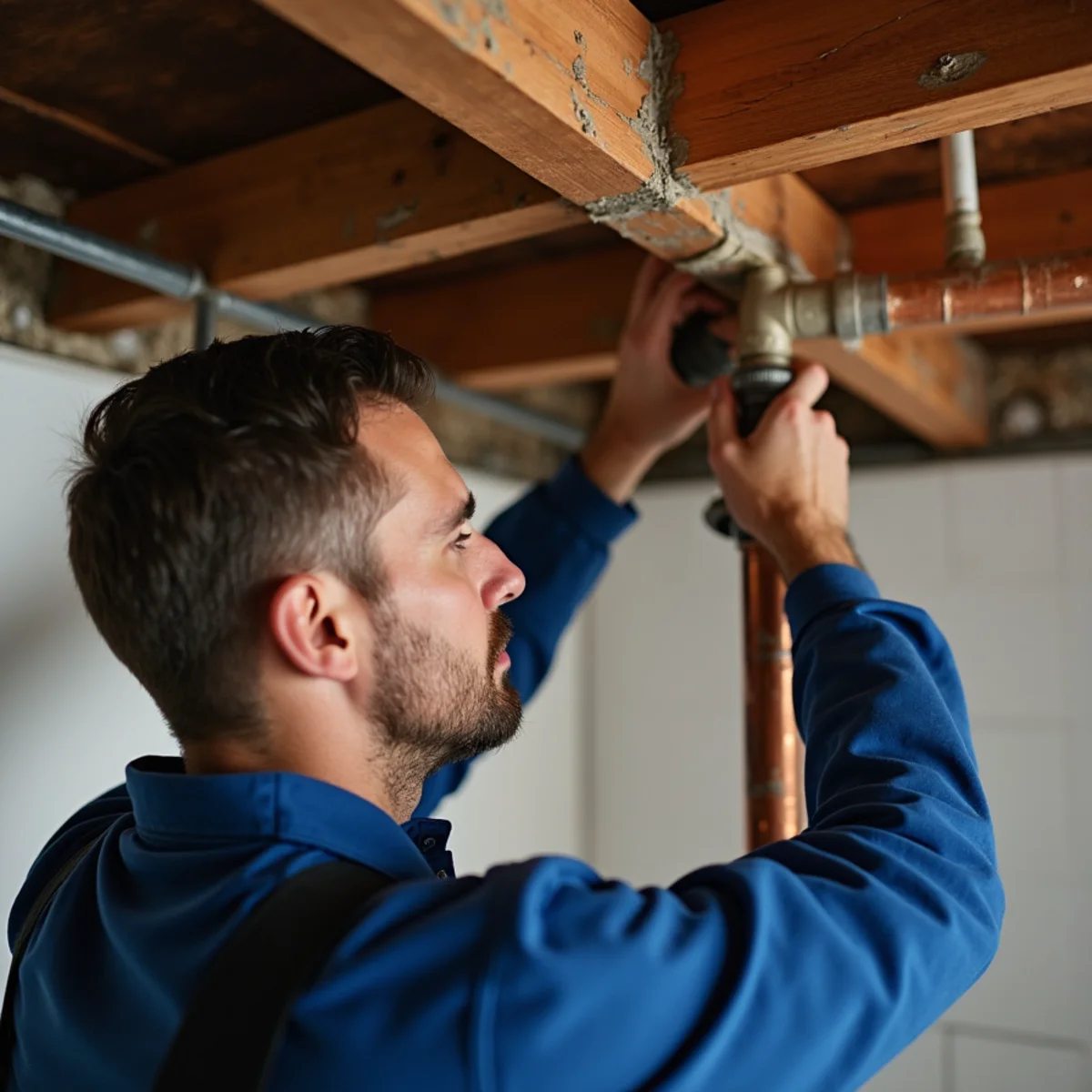
Pipe repair in Westfield runs from an emergency — a pipe that froze and burst overnight — to a planned upgrade like replacing failing galvanized supply lines or repiping a whole house. We fix the leak now and tell you honestly whether the pipe around it is worth keeping.
Roughly 37 to 40% of Westfield homes pre-date 1940, so galvanized steel supply lines and lead or galvanized water service lines are common — and New Jersey’s 2021 law requires every lead service line to be replaced by 2031. Every hard freeze also brings burst-pipe calls. This page covers both the emergency and the upgrade.
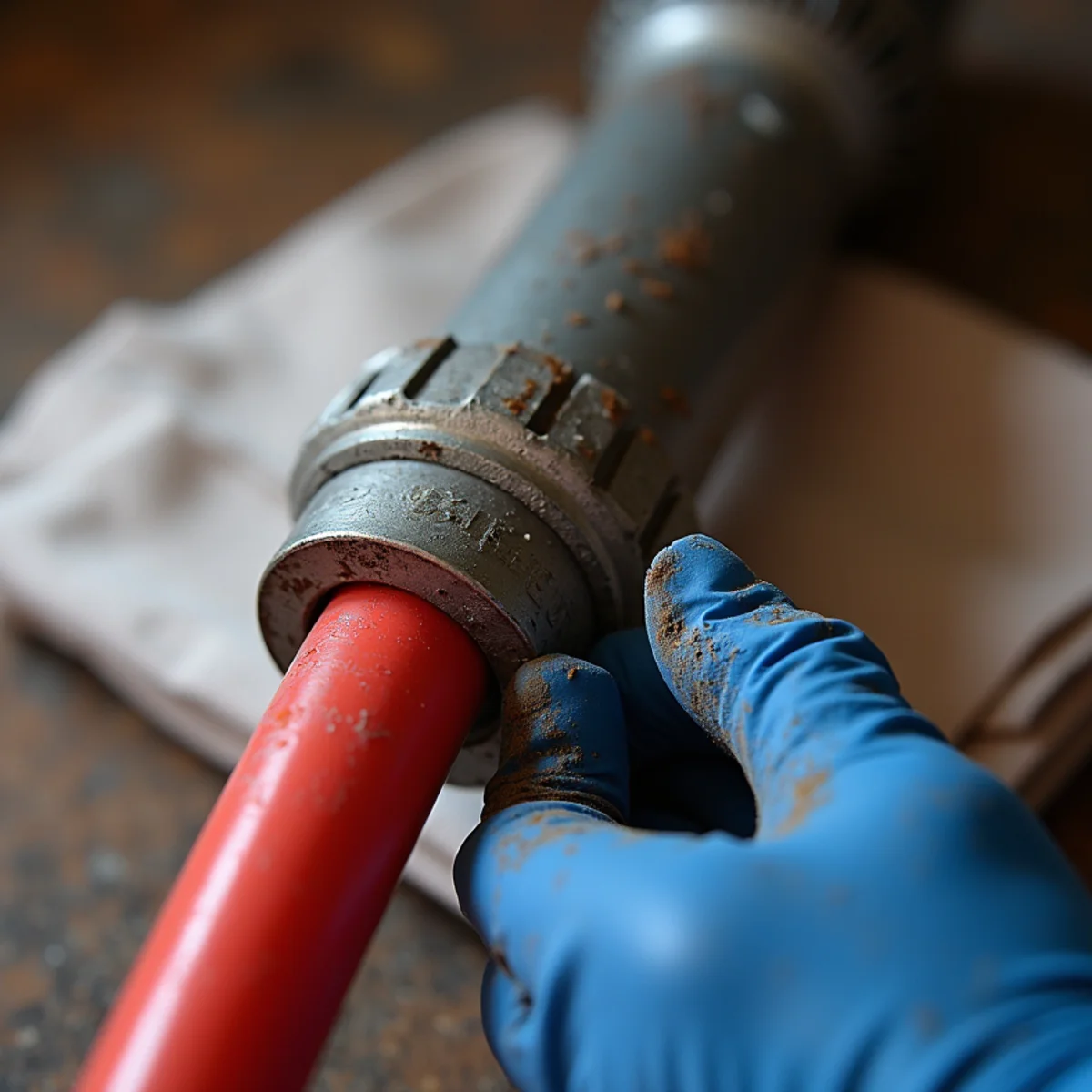
Pipe problems we repair: pinhole leaks, burst pipes, failed joints
Pipes fail in a few predictable ways. Copper develops pinhole leaks from corrosion; galvanized steel closes up with rust from the inside and leaks at threaded joints; freezing splits any pipe that holds water. We repair the failed section and, more importantly, tell you whether it is an isolated failure or the first of many in a pipe that is near the end of its life.
- Pinhole leaks and corrosion in copper supply lines
- Burst and split pipes from freezing
- Failed soldered or threaded joints
- Leaking or rusted galvanized steel supply lines
- Hidden leaks behind plaster walls and under basement slabs
Frozen and burst pipes: thawing, repair and preventing a repeat
A frozen pipe that has not burst yet needs safe thawing — never an open flame. A pipe that has already burst needs the water shut off at the main and the section replaced. Once the emergency is handled, the real fix is preventing a repeat: insulating the exposed run, sealing the draft that let cold reach it, or rerouting a pipe that runs through an unheated space. We do the repair and point out where the next freeze is likely if nothing changes.
Galvanized steel supply lines in pre-1960 Westfield homes
Galvanized steel pipe was standard in homes built before about 1960 and rusts closed from the inside over decades. The symptoms are low water pressure, discolored water after the tap sits, and leaks at the threaded joints. Patching one leak in a galvanized system often just moves the next failure downstream. When the pipe is far enough gone, replacing the affected runs — or repiping — is the repair that actually holds, and we lay out both so you can choose.
Water service lines: lead and galvanized replacement and the 2031 deadline
The water service line is the pipe that brings water from the street into your home. In older Westfield homes it may be lead or galvanized. New Jersey’s 2021 law requires every lead service line to be replaced by 2031, and New Jersey American Water is running a replacement program in Westfield for lead and galvanized customer-side lines — in many cases at no direct cost at the time of replacement. Start with the utility: contact New Jersey American Water about the program before paying anyone to replace a lead line. We can help you identify your line and coordinate the plumbing side.
For lead or galvanized water service line replacement, contact New Jersey American Water about its replacement program first — qualifying lines may be replaced at no direct cost. We do not perform that program’s work for free and will point you to the utility before any paid work.
Whole-home repiping: PEX vs copper, working around plaster walls
A whole-home repipe replaces the failing supply pipes throughout the house. PEX is flexible, freeze-tolerant and can often be routed with fewer wall openings; copper is rigid and long-proven. In an older Westfield home with plaster walls, minimizing and cleanly patching wall openings is a big part of the job, and we plan the routing and the restoration before we start so you know what to expect room by room.
Finding hidden leaks behind plaster and under basement slabs
Not every leak is visible. A stain on a ceiling, a warm spot on a slab, a water bill that jumped for no reason — these point to a concealed leak. We locate hidden leaks behind plaster and under slabs before opening anything, so the access is targeted and the repair is precise rather than exploratory.
What affects pipe repair and repipe cost
A single burst-pipe repair depends on access and how much pipe is affected. A repipe depends on the number of fixtures, the pipe material, access through finished walls and the restoration afterward. As planning references only — not quotes — a spot repair of a leak runs on the smaller end, while a whole-home repipe is a multi-day project priced after a full inspection. Lead service line work should start with the utility program described above. Your plumber gives you the actual price after seeing the home.
What affects the price
We give you a price before work starts. These are the factors that move it — your plumber confirms the actual number on site.
- Emergency spot repair versus planned repiping
- Pipe material: copper, galvanized, PEX
- Number of fixtures and length of pipe in a repipe
- Access through finished and plaster walls, and restoration
- Whether the water service line is lead or galvanized (and the utility program)
- Leak detection when the leak is concealed
Why choose Hydrosphere Plumbers for pipe repair & repiping
We fix the leak and the cause
A burst or pinhole leak gets repaired now — but we also tell you honestly whether the pipe around it is near the end of its life, so you are not back next month for the next failure downstream.
Honest about galvanized and lead
For a lead or galvanized water service line, we point you to the New Jersey American Water program first, which may replace qualifying lines at no direct cost — we never charge you for work the utility may cover.
Repipes planned around your walls
In an older home with plaster walls, minimizing and cleanly patching openings is half the job. We plan the PEX-versus-copper routing and the restoration before we start, so you know what to expect room by room.
24/7, licensed and insured
A frozen pipe that bursts overnight cannot wait. A live person answers any hour at (858) 363-8298, and every plumber we send is licensed and insured in New Jersey.
Pipe Repair & Repiping across Westfield and nearby Union County towns
We repair pipes and repipe homes across Westfield and the nearby Union County towns, where roughly 37 to 40% of houses pre-date 1940 — so galvanized supply lines and lead or galvanized service lines are common, and every hard freeze brings burst-pipe calls. From an exposed run that froze in a Mountainside hillside home to a whole-home repipe in a Fanwood Victorian, a licensed plumber is a short drive away.
We cover Scotch Plains, Cranford, Clark, Springfield, Fanwood and Mountainside, plus Garwood — see all the areas we serve.